Five face-down playing cards in a row on green felt

5 Card Poker Rules: Draw and Stud Explained

The two traditional five-card forms are Five Card Draw and Five Card Stud. In both forms the player finishes with five personal cards. The key difference is how those cards arrive and what other players can see. Five Card Draw rules Each player receives five private cards. After a betting round, remaining players choose which

Separated stacks of chips at an empty poker tournament table

How Poker Tournaments Work: Formats, Buy-ins and Blinds

A poker tournament gives each entry a starting stack. Blinds rise at scheduled intervals, tables combine as players are eliminated, and payouts, if offered, follow the event’s published structure. Tournament chips track play within the event and are not redeemed like ordinary cash-game chips. Freezeouts, re-entries, rebuys and freerolls A freezeout ends a player’s event

Poker Cheat Sheet: Printable Hand Rankings and Odds

This printable Texas Hold’em poker cheat sheet shows the hand order, basic positions, draw odds and the percentage needed to call. Keep it next to a deck while you work through the examples. Download the one-page PDF · Open the full-resolution PNG Texas Hold’em practice reference. Standard high hand order. Hand order A royal flush
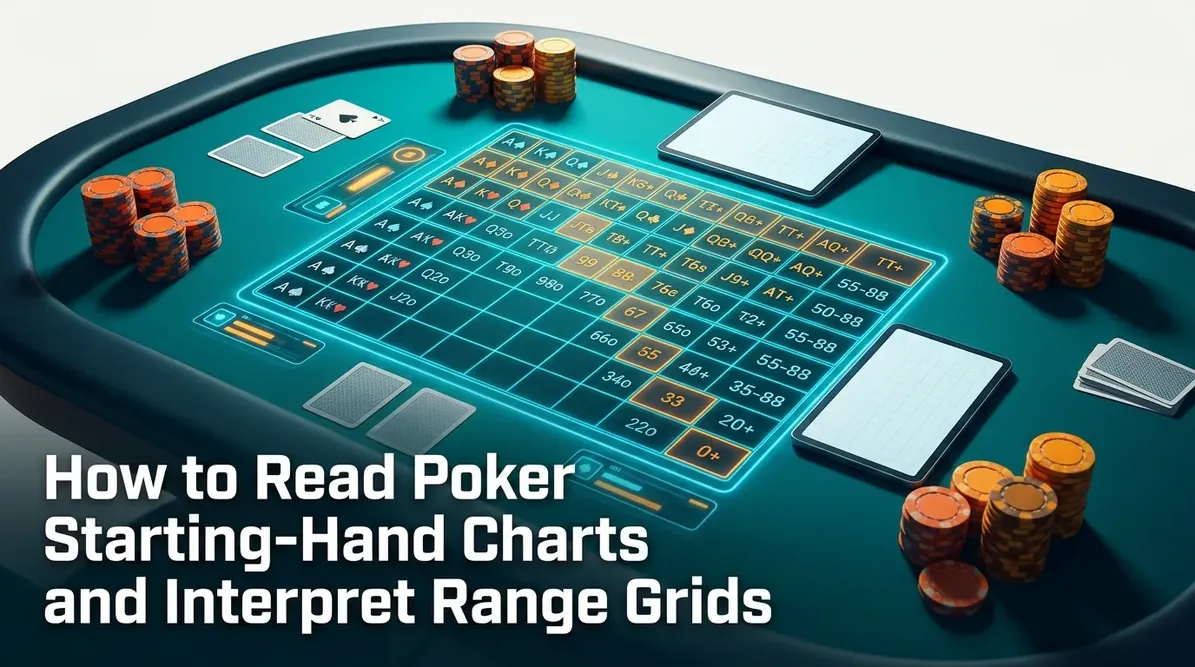
Glowing poker chart on felt table for interpreting range grids

How to Read Poker Starting-Hand Charts and Interpret Range Grids

Poker starting-hand charts guide Texas Hold’em players in choosing whether to raise, call, or fold. Each chart displays all possible two-card combinations dealt before the flop. The article presents the 13-by-13 hand matrix and clarifies the symbols used for suited and offsuit hands. It defines the meanings of plus signs and dash-range notation. The writer
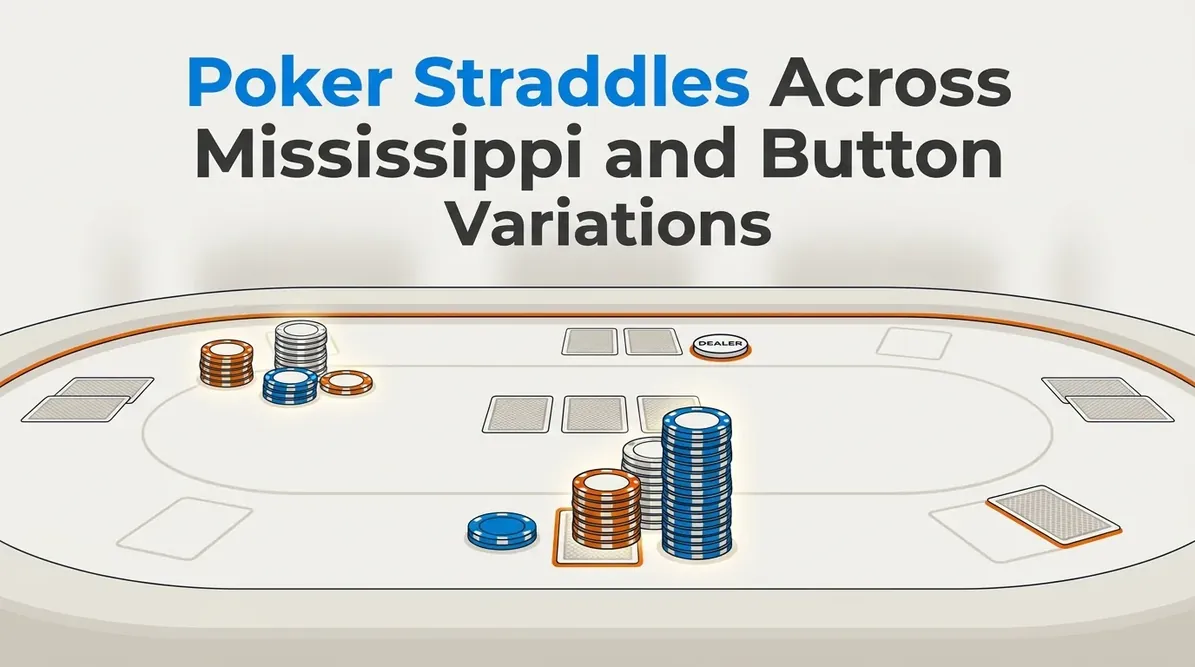
Poker table with chips and cards, showing straddle mechanics and variations.

Poker Straddles Across Mississippi and Button Variations

A poker straddle doubles the big blind, and the straddler acts last before the flop. Players add a third blind when using a straddle, which changes the preflop stakes and the order of action. With a live straddle, others must call a higher amount to stay in the hand. Some cash games allow straddles, but
Two players at a table with a dealer button, illustrating heads-up poker rules.

Heads-Up Poker Rules on Dealer Button and Action Flow

Heads up games involve two players. Each hand includes a dealer button and two blinds. The order of action shifts between the preflop and postflop rounds. Before the flop, the player with the button posts a blind and acts first. On the flop, turn, and river, this player acts last. The other player posts the
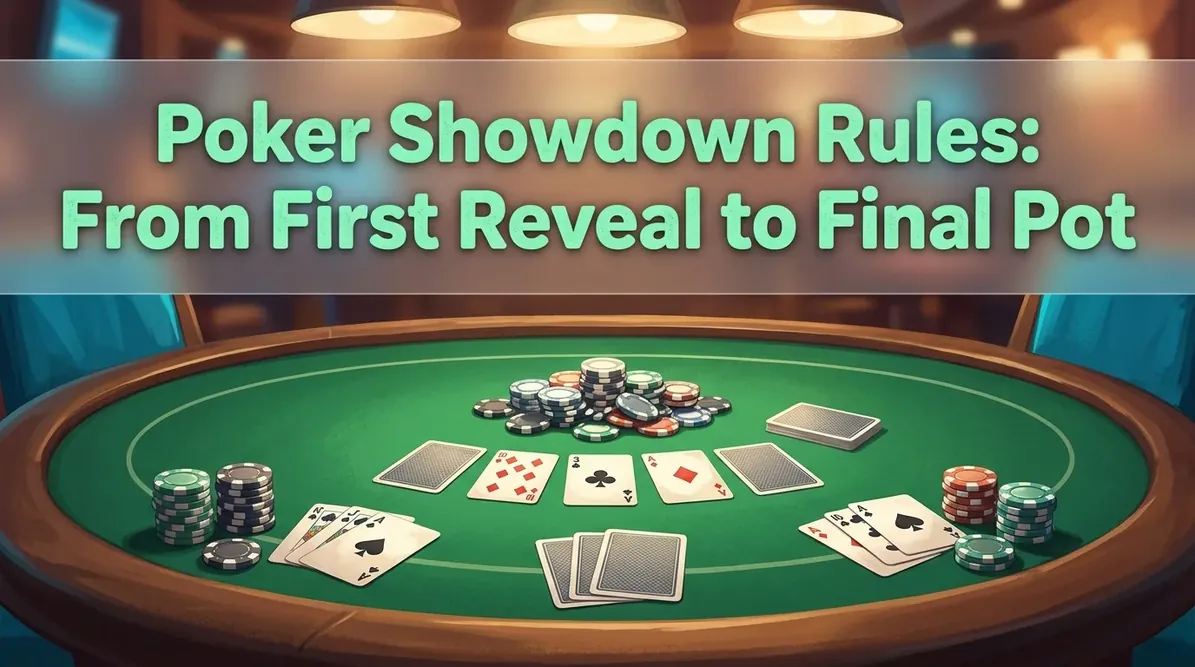
Community cards and hole cards on a table for poker showdown rules.

Poker Showdown Rules: From First Reveal to Final Pot

A showdown occurs after the final betting round when at least two players still have active hands. In a contested pot, poker rules instruct each player to reveal their hole cards simultaneously. Each player places these cards face-up, allowing the dealer and opponents to verify them. The outcome depends on the cards displayed, not on
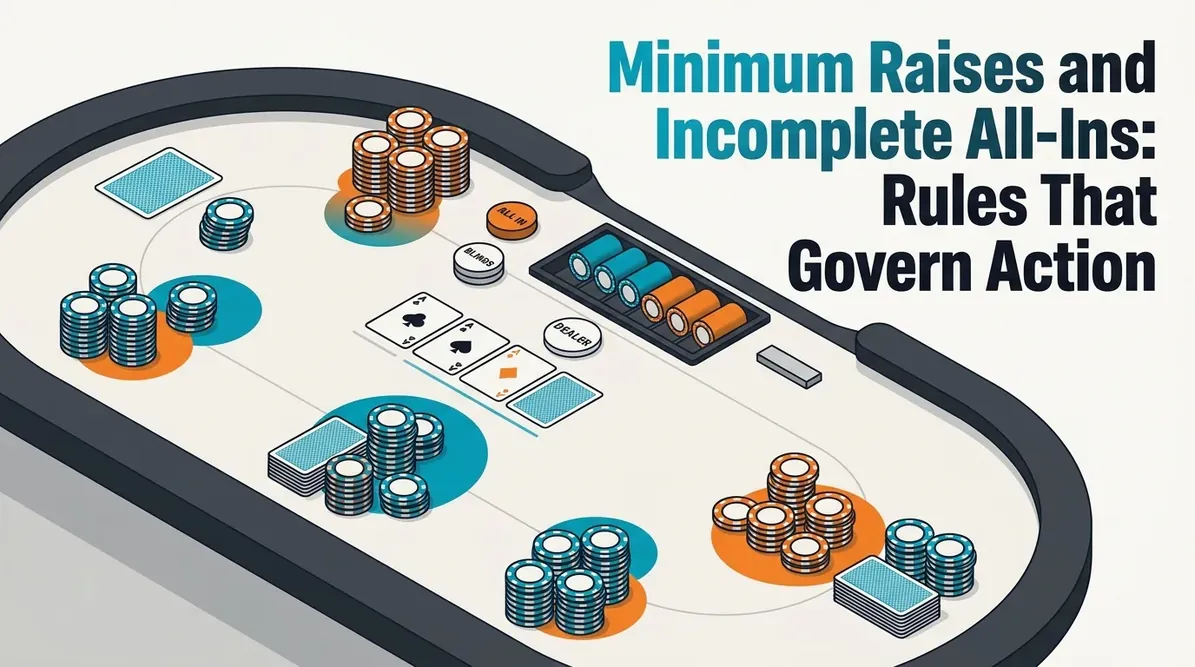
Poker chips on a table showing all-in rules for player actions.

Minimum Raises and Incomplete All-Ins: Rules That Govern Action

Minimum raise rules shape each betting choice. When a player goes all-in with less than the minimum raise, the next players decide how to act. See also betting rounds. Minimum raises and short all-ins Key betting concepts determine what happens when a player goes all-in with a specific amount. Players may encounter one of two
Poker all-in bet and multi-pots on a green table.

Poker All In Rules Behind Every Multi-Pot Hand

Understanding poker all in rules helps players at Indian poker tables recognise how different stack sizes affect betting and pot distribution. When a player goes all-in, they commit their entire remaining stack and cannot be required to contribute additional chips. Other players may continue betting, creating a main pot and one or more side pots